







Best Smart Gadgets for Everyday Life: Complete Buying Guide
Best Smart Gadgets for Everyday Life: Complete Buying Guide
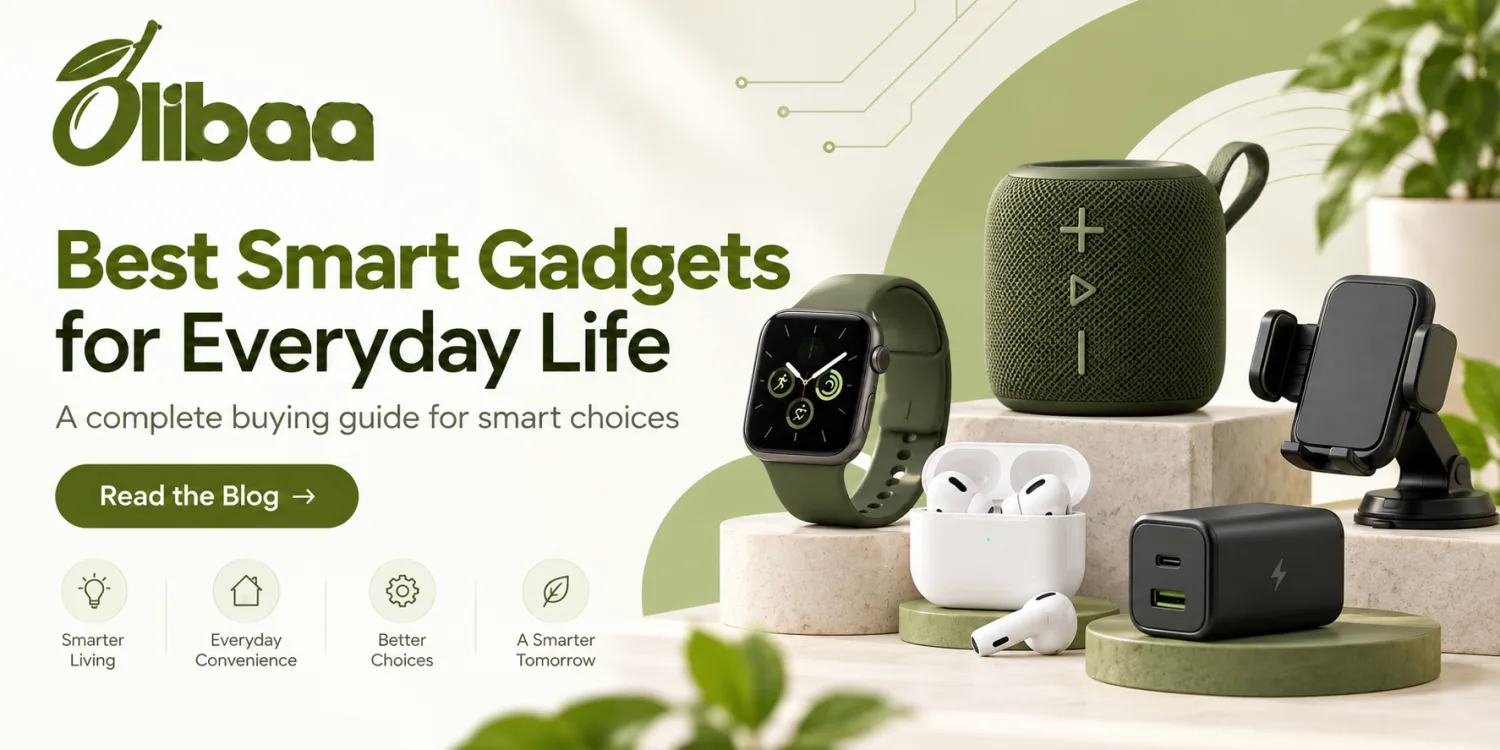
Technology has become part of almost every area of modern life. We use connected devices to communicate, work, study, exercise, enjoy entertainment, manage schedules, monitor everyday activities, and control other electronics. As technology becomes more accessible, smart gadgets are no longer limited to expensive or highly technical products. Today, consumers can find smart watches, wireless earbuds, smart bands, portable speakers, charging accessories, tracking devices, connected home products, and many other useful devices designed for everyday use.
However, having more choices can also make buying more difficult. Two products may look similar but offer very different battery life, connectivity, compatibility, build quality, software support, or warranty terms. A low price does not always mean good value, and an expensive product is not automatically the right choice for every user. The best smart gadget is usually the one that matches your actual needs, works properly with your existing devices, and offers useful features without unnecessary complexity.
This guide explains how to choose smart gadgets carefully. Whether you are buying your first wearable device, upgrading your wireless accessories, looking for useful technology for your home, or comparing gadgets for work and entertainment, understanding a few basic factors can help you avoid common mistakes.
The goal is not to buy the product with the longest feature list. The goal is to choose technology that solves a real problem, fits your lifestyle, and remains useful after the excitement of buying something new has passed.
What Are Smart Gadgets?
Smart gadgets are electronic devices that use modern technology to provide functions beyond those of traditional electronics. Many connect through Bluetooth, Wi-Fi, mobile applications, USB connections, or other wireless systems. Some can collect information, communicate with smartphones, automate tasks, provide notifications, or work together with other connected devices.
A traditional wristwatch mainly tells the time. A smartwatch may also show notifications, control music, track activity, set reminders, provide timers, and connect with a smartphone. Traditional earphones play audio through a cable, while wireless earbuds may include Bluetooth connectivity, touch controls, microphones, charging cases, and other features.
The word “smart” does not necessarily mean that a product uses advanced artificial intelligence. In many cases, it simply means the device provides connected, automated, programmable, or app-based functionality.
Common examples of smart gadgets include smart watches, fitness bands, wireless earbuds, Bluetooth speakers, trackers, smart plugs, wireless chargers, portable power accessories, smart lighting products, security accessories, and mobile-connected devices.
Because the category is broad, buyers should evaluate each type differently. Battery life may be the most important feature in a wearable gadget, while sound quality and microphone performance may matter more for wireless earbuds. A smart home product may require reliable Wi-Fi and app compatibility, while a portable accessory may depend more on build quality and charging performance.
Understanding what you actually expect from the device should always come before comparing specifications.
Why Smart Gadgets Are Becoming So Popular
The popularity of smart gadgets comes largely from convenience. People increasingly want devices that reduce repeated tasks, provide faster access to information, and work together with technology they already own.
For example, a smartwatch can allow a user to check a notification without repeatedly taking out a phone. Wireless earbuds remove the need for audio cables. A smart plug may allow supported appliances to be controlled more conveniently. A portable charger helps users keep essential devices powered while travelling.
Another reason is portability. Many modern smart devices are small enough to carry every day. Improvements in batteries, wireless technology, and compact electronic components have allowed manufacturers to provide more functionality in smaller products.
Smart gadgets are also popular because they can support different lifestyles. A student may value wireless earbuds and a compact charger. An office worker may prefer a smartwatch and multi-device keyboard. A traveller might prioritize power banks, trackers, and portable adapters. Someone interested in home automation may choose smart plugs, lights, cameras, or sensors.
The important point is that not every smart gadget is useful for every person. Buying based only on popularity can lead to unused devices. A better approach is to identify your daily needs and choose products that fit them.
Types of Smart Gadgets Worth Considering
The smart gadget market covers many different products, but several categories are especially common for everyday users.
Smart Watches
Smart watches are among the most recognizable wearable gadgets. Depending on the model, they may provide notifications, timers, alarms, activity tracking, music controls, call-related features, customizable watch faces, and smartphone integration.
When comparing smart watches, consider smartphone compatibility first. Some watches provide their best experience only with specific operating systems. Battery life, display quality, comfort, water resistance ratings, charging method, app support, and notification features are also important.
A smartwatch with many features may still be inconvenient if it requires frequent charging or does not work properly with your phone.
Smart Bands and Fitness Trackers
Smart bands are usually smaller and simpler than smart watches. They often focus on basic activity tracking, notifications, alarms, timers, and everyday wearable functions.
Their advantages can include lower weight, simpler interfaces, and longer battery life compared with more feature-heavy watches. They may be suitable for users who want basic tracking without carrying a larger wearable device.
Accuracy and supported functions can differ by model, so buyers should avoid assuming that every fitness tracker provides professional-grade measurements. Consumer wearable data should generally be treated as informational rather than a substitute for professional medical equipment or advice.
Wireless Earbuds
Wireless earbuds have become common for music, calls, online classes, gaming, commuting, and everyday communication.
Important features include sound quality, microphone quality, fit, battery life, charging case capacity, Bluetooth version, latency, water resistance, touch controls, and compatibility.
For calls, microphone performance may be more important than powerful bass. For travel, comfort and battery life may matter most. For gaming or video, low latency can be valuable.
Choosing based on actual use is more useful than simply comparing which model has the longest specification list.
Bluetooth Speakers
Portable Bluetooth speakers are useful for music, presentations, outdoor use, small gatherings, and casual entertainment.
Consider speaker size, battery capacity, charging method, Bluetooth range, sound balance, portability, water resistance, and maximum volume.
A larger speaker may provide stronger audio but be less convenient to carry. A compact model may be ideal for travel but not suitable for filling a large room.
Smart Home Gadgets
Smart home products include smart plugs, lighting, sensors, cameras, switches, controllers, and other connected accessories.
Before purchasing, check whether the device works with your home Wi-Fi system, smartphone platform, and any automation ecosystem you already use.
Security and software support are especially important for internet-connected products. Users should keep device firmware updated, use strong passwords, and follow manufacturer security recommendations.
Charging and Power Gadgets
Power banks, wireless chargers, multi-port adapters, smart charging hubs, USB-C chargers, and portable charging accessories are among the most practical technology products.
When buying charging products, safety and compatibility are extremely important. Check supported voltage, power output, connector type, charging protocol, device compatibility, and applicable safety information.
Avoid choosing unknown charging accessories based only on extremely high advertised power figures. Reliable power delivery and proper protection are more important than impressive marketing numbers.
Step 1: Decide What Problem the Gadget Should Solve
Before comparing products, ask a simple question: What do I need this device to do?
This can prevent unnecessary purchases.
If you regularly miss calls because your phone stays in your bag, a smartwatch with notifications may be useful. If cables become inconvenient during commuting, wireless earbuds may solve the problem. If your phone frequently runs out of power while travelling, a reliable power bank could provide more value than another entertainment gadget.
Write down two or three features you genuinely need.
For example, if buying earbuds:
- Comfortable for long use
- Clear microphone for calls
- At least several hours of practical battery life
- Compatible with your smartphone
- Reliable charging case
Once these requirements are clear, comparing products becomes much easier.
Consumers often make the opposite mistake: they first become interested in a gadget and then try to find a reason to own it. Starting with the problem instead of the product usually leads to better buying decisions.
Step 2: Check Compatibility Before Buying
Compatibility is one of the most important parts of buying smart gadgets.
A device may have excellent hardware but still provide a poor experience if it does not work properly with your smartphone, tablet, computer, Wi-Fi network, charging system, or preferred application.
Before buying, check:
- Supported operating systems
- Required app
- Bluetooth requirements
- Wi-Fi frequency support
- Charging connector
- Power requirements
- Supported devices
- Regional limitations, if applicable
For example, some smart gadgets require a mobile app for configuration. If the app is unavailable for your phone or region, important features may not work.
Similarly, USB-C ports do not always support identical charging speeds or data capabilities. The physical connector may look the same while the supported technology differs.
Compatibility checks take only a few minutes but can prevent one of the most common causes of disappointing gadget purchases.
Step 3: Compare Battery Life Realistically
Battery life is particularly important for smart watches, earbuds, speakers, trackers, cameras, and other portable devices.
Manufacturers may publish estimated battery performance based on specific testing conditions. Real-world usage can vary depending on screen brightness, wireless connections, volume, notifications, sensors, temperature, and enabled features.
Instead of looking only at the largest battery number, consider how the product will actually fit into your routine.
For wearable gadgets, ask how often you are willing to charge them. For wireless earbuds, check both earbud battery time and additional charging from the case. For portable speakers, consider how long you typically use them away from a power source.
Charging speed also matters. A device with average battery capacity but convenient fast charging may be more practical than one with slightly longer battery life but extremely slow charging.
Over time, rechargeable batteries naturally lose some capacity, so choosing a product with comfortably sufficient battery life can provide a better long-term experience.
Step 4: Understand Connectivity Options
Smart gadgets commonly use Bluetooth, Wi-Fi, USB, NFC, or combinations of different technologies.
Bluetooth
Bluetooth is widely used for earbuds, smart watches, speakers, keyboards, controllers, and wearable accessories.
Newer Bluetooth versions may improve efficiency, stability, or supported capabilities, but overall performance also depends on device design and software.
Wi-Fi
Wi-Fi is common in smart home devices, cameras, plugs, and connected appliances.
Check whether the gadget supports the Wi-Fi band used by your network. Some devices may only support 2.4 GHz Wi-Fi.
USB and USB-C
USB connections are used for charging, data transfer, accessories, and device communication.
USB-C has become common, but not every USB-C port supports the same charging speed or features.
NFC and Other Wireless Features
Some products may support NFC or other short-range technologies. These can be useful for specific functions, but they should only influence your purchase if you actually need them.
Choose connectivity based on practical compatibility rather than simply looking for the largest number of wireless features.
Step 5: Check Build Quality and Everyday Durability
Smart gadgets are often carried, touched, dropped, charged, and used every day. Build quality therefore matters almost as much as software features.
Pay attention to materials, buttons, hinges, charging ports, straps, cases, cable quality, and overall construction.
For wearable devices, comfort is especially important. A technically excellent watch is not useful if the strap causes discomfort. Wireless earbuds need a secure fit, while portable devices should be easy to carry.
If a device advertises water or dust resistance, check the specific rating rather than assuming that terms such as “water resistant” mean the device is waterproof in every situation.
IP ratings, where provided, describe specific testing conditions. Buyers should still follow manufacturer instructions regarding water exposure.
Durability does not necessarily require a heavy or expensive design. Good engineering, quality materials, replaceable accessories, and proper protection can all contribute to longer product life.
Step 6: Evaluate Features You Will Actually Use
Feature lists are designed to make products look impressive. However, more features do not always create more value.
Consider a smartwatch with dozens of functions. If you only use notifications, alarms, timers, and basic activity tracking, paying significantly more for advanced features you never use may not make sense.
The same applies to speakers, earbuds, chargers, and home gadgets.
Separate features into three categories:
Essential: You need them regularly.
Useful: They would improve your experience.
Optional: Interesting but not important.
This simple method prevents feature overload from influencing the buying decision.
A well-selected mid-range gadget that handles your essential needs reliably can be a better purchase than an expensive model filled with functions that remain unused.
Step 7: Compare Price With Long-Term Value
Smart gadgets are available across a wide price range. The cheapest product may save money initially, but poor reliability can make it more expensive over time. At the same time, premium products may include features that provide little benefit to your particular use.
Long-term value depends on several factors:
- Build quality
- Battery durability
- Warranty
- Availability of replacement accessories
- Software support
- Compatibility
- Reliability
- Repairability
- Expected frequency of use
For example, spending slightly more on earbuds used several hours every day may make sense because comfort and microphone quality are important. However, paying premium prices for a gadget used only occasionally may provide little extra value.
Think in terms of cost per use rather than simply purchase price.
A product you use daily for two years may provide better value than a cheaper item replaced several times during the same period.
Step 8: Pay Attention to Warranty and Return Conditions
Smart gadgets contain electronics, batteries, sensors, wireless components, and charging circuits. Problems can occur even with reputable products.
Before purchasing, check:
- Warranty period
- Who provides the warranty
- What the warranty covers
- Replacement conditions
- Return eligibility
- Required packaging or accessories
- Proof-of-purchase requirements
The warranty offered by a manufacturer may differ from the seller's own replacement or return policy.
Keep invoices, receipts, warranty cards, packaging, and product serial information when appropriate.
At Olibaa, customers should review the specific warranty and return information shown for each eligible product before completing a purchase, because terms may vary depending on product type and category.
Common Mistakes When Buying Smart Gadgets
One common mistake is buying based entirely on appearance. Attractive product photos do not tell you whether the device has reliable connectivity, suitable battery life, or good compatibility.
Another mistake is assuming a higher specification number always means better performance. A larger battery, newer Bluetooth version, higher power rating, or larger driver can be useful, but overall performance depends on how well the product is designed.
Ignoring compatibility is another frequent problem. Always verify that the device supports your phone, operating system, charging standard, or network.
Buyers sometimes overlook physical comfort. Wearables, earbuds, headphones, and handheld gadgets may be used for hours at a time. Comfort can be more important than additional technical features.
Another mistake is purchasing devices for features that will never be used. Marketing can make advanced functionality sound essential when basic functions may already satisfy your needs.
Finally, avoid ignoring warranty, replacement, and return information. These details become important only when something goes wrong, which is exactly why they should be checked before buying.
Smart Gadgets for Students
Students often benefit from simple technology that improves communication, studying, and portability.
Wireless earbuds can help with online classes and educational content. Portable chargers can keep smartphones powered throughout the day. Smart watches may provide reminders, timers, and notifications. Compact Bluetooth keyboards can improve productivity with tablets.
The key for students is balancing price, durability, and practical usefulness.
Devices should be easy to carry and simple to charge. Expensive advanced features may not be necessary if the gadget mainly supports studying, communication, or entertainment.
A good student gadget should reduce inconvenience rather than create another device that requires constant management.
Smart Gadgets for Office and Remote Work
Remote workers and office users may have different priorities.
Reliable wireless audio, clear microphones, comfortable keyboards, charging hubs, smart watches, and portable accessories can improve daily workflows.
For online meetings, microphone quality can be more valuable than entertainment-focused audio features. For users switching between multiple devices, accessories that support easy connectivity can reduce setup time.
Battery reliability is also important because devices running out of power during work can cause unnecessary interruption.
Office buyers should prioritize reliability, comfort, and compatibility before novelty.
Smart Gadgets for Travel
Travellers often depend heavily on portable electronics.
Useful travel gadgets may include power banks, compact chargers, wireless earbuds, trackers, universal charging accessories, small speakers, and wearable devices.
When selecting travel technology, focus on size, weight, battery capacity, charging requirements, and durability.
Avoid carrying several gadgets that perform nearly identical tasks. Multipurpose accessories can reduce luggage and simplify charging.
Travellers should also check transportation regulations related to batteries and electronic devices, particularly when flying.
Good travel technology should make the journey easier without adding unnecessary weight or complexity.
Smart Gadgets and Privacy
Connected technology can collect information depending on its features and settings.
Before using smart devices, review app permissions and privacy settings. Avoid granting unnecessary access to contacts, location, microphone, camera, or other sensitive information when those permissions are not required for the feature you are using.
Use strong account passwords and enable additional security options when available.
Keep apps and device firmware updated. Updates may improve performance, fix bugs, or address security issues.
For smart home devices, secure your Wi-Fi network and change default passwords where applicable.
Convenience should not come at the expense of basic digital security practices.
How to Compare Two Similar Smart Gadgets
When two products appear similar, comparing them side by side can make the decision easier.
Start with compatibility. Remove any option that does not properly support your devices.
Next compare the features that matter most for your use. If buying wireless earbuds for work calls, compare microphone performance, battery life, comfort, and connection reliability before features such as lighting effects or gaming modes.
Then compare warranty and price.
Finally, ask which product is likely to remain useful longer.
A simple comparison focused on five important factors is usually more useful than comparing twenty specifications that have little impact on everyday use.
Smart Gadget Buying Checklist
Before purchasing a smart gadget, check the following:
- Identify the main problem you want the gadget to solve.
- Confirm compatibility with your phone, computer, network, or charger.
- Compare realistic battery performance.
- Check connectivity options.
- Review build quality and comfort.
- Verify important specifications.
- Ignore features you are unlikely to use.
- Compare total value rather than only price.
- Review warranty information.
- Read applicable return conditions.
- Check included accessories.
- Confirm charging requirements.
- Review privacy and app requirements.
- Keep proof of purchase after buying.
Using a checklist helps reduce impulse buying and makes comparison more objective.
Frequently Asked Questions About Smart Gadgets
What are the most useful smart gadgets for everyday life?
The answer depends on lifestyle, but smart watches, wireless earbuds, power accessories, Bluetooth speakers, trackers, and selected smart home devices are commonly useful because they solve frequent everyday problems.
Are expensive smart gadgets always better?
No. Higher-priced models may offer better materials, software support, additional features, or premium branding, but the best choice depends on your requirements. A lower-cost product can be better value if it provides the features you actually need.
What should I check before buying a smartwatch?
Check smartphone compatibility, battery life, display, comfort, notification functions, charging method, supported apps, water resistance information, and warranty.
What should I look for when buying wireless earbuds?
Consider sound quality, microphone performance, comfort, battery life, charging case capacity, Bluetooth stability, latency, controls, and device compatibility.
Is Bluetooth version important?
It can affect supported capabilities, efficiency, and compatibility, but Bluetooth version alone does not determine overall product quality. Antenna design, software, hardware, and implementation also matter.
How important is battery capacity?
Battery capacity is important, but it should be considered together with device efficiency and expected usage. Two devices with similar battery capacity may provide different real-world runtime.
Should I buy smart gadgets only from well-known brands?
Brand reputation can be useful, but buyers should evaluate the individual product, specifications, warranty, seller information, and customer support rather than relying only on the brand name.
How can I make smart gadgets last longer?
Use appropriate chargers, avoid unnecessary heat exposure, keep devices clean, protect them from drops and moisture, follow charging instructions, update software when applicable, and store them properly.
Can smart gadgets work without the internet?
Some can. Bluetooth earbuds, many wearable functions, offline timers, and basic accessories may work without internet access. Other devices, particularly cloud-connected smart home products, may require internet connectivity for certain features.
Where can I explore different smart gadgets?
You can explore the Smart Gadgets category on Olibaa to compare available products, specifications, features, warranty information, and other details before deciding which device best matches your needs.
Final Thoughts
Smart gadgets can make everyday life more convenient, but the real value of technology comes from choosing devices that serve a useful purpose. The newest product is not always the best product, and the device with the most features is not always the most practical choice.
Start by understanding your needs. Decide what problem you want to solve, then compare compatibility, battery life, connectivity, build quality, features, warranty, and overall value.
For wearable gadgets, comfort and battery life may be your priorities. For wireless accessories, connection reliability and usability may matter most. For smart home products, compatibility and security deserve extra attention. For charging equipment, safety and proper power support should come before impressive specifications.
Technology changes quickly, but good buying principles remain consistent. Avoid buying only because a product is trending. Avoid paying for features you will rarely use. Verify important specifications and read product information carefully.
A smart purchase is not necessarily the most expensive purchase. It is the product that fits naturally into your daily routine and continues to provide useful value over time.
Whether you are looking for a smartwatch, smart band, wireless earbuds, Bluetooth speaker, charging accessory, or another connected device, taking a few minutes to compare products carefully can save both money and frustration.
Explore the Smart Gadgets category at Olibaa and compare available options based on the features that matter most to you. Choose technology thoughtfully, focus on practical value, and build a collection of gadgets that genuinely makes everyday tasks simpler and more convenient.
Recent Posts
Shop with Confidence at Olibaa

Subscribe to our newsletter for regular updates about Offers, Coupons & more